
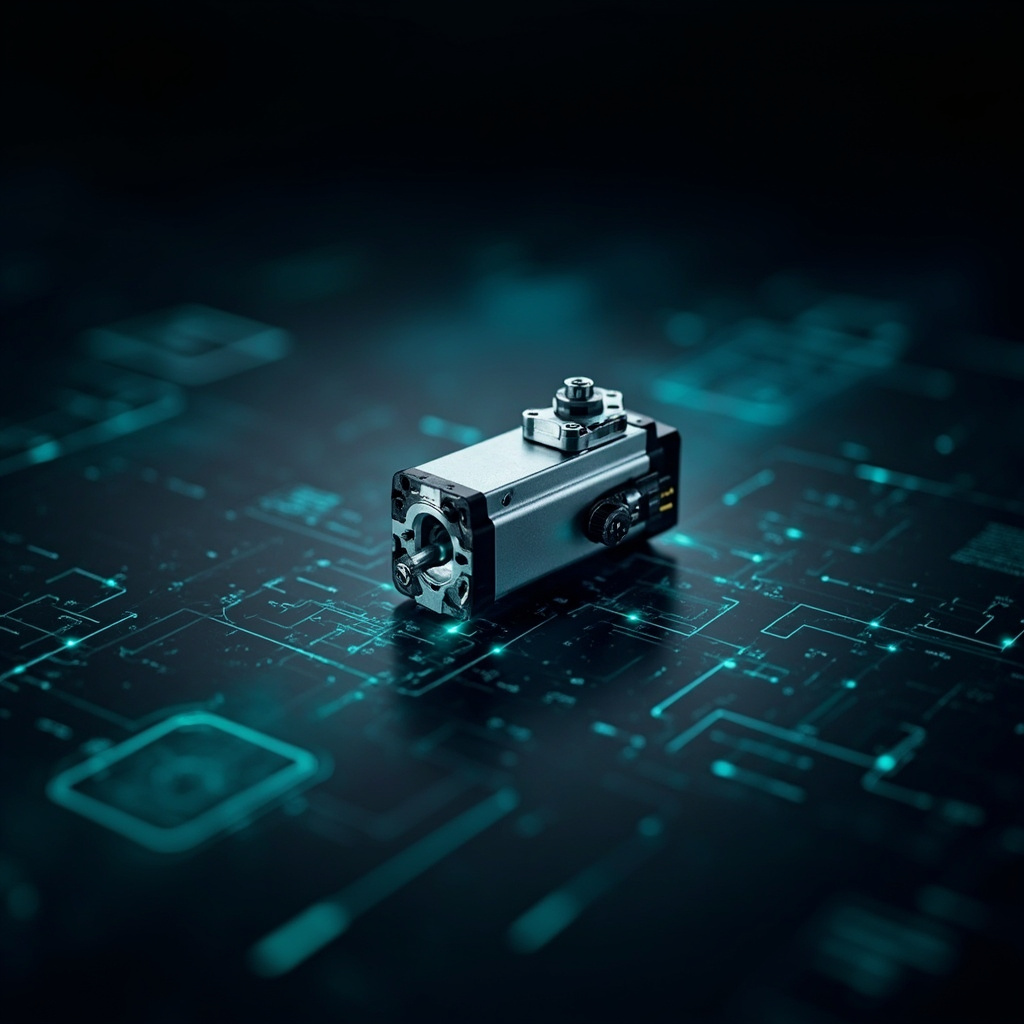
Servo parameter initialization is a critical process in motion control systems, robotics, CNC machinery, and industrial automation. It involves setting up the foundational configuration values that determine how a servo motor and its drive controller will behave under various operating conditions. Proper initialization ensures precision, repeatability, safety, and optimal performance across countless applications ranging from small hobby projects to large-scale manufacturing lines. Without correctly initialized parameters, a servo system may exhibit jitter, overshoot, poor torque response, or even catastrophic hardware failure.
This comprehensive guide explores the essential concepts, procedures, and best practices for servo parameter initialization, helping engineers, technicians, and hobbyists configure their systems for maximum efficiency and reliability.
What Is Servo Parameter Initialization?
Servo parameter initialization refers to the process of configuring the control variables inside a servo drive or motion controller. These parameters dictate how the servo amplifier responds to command signals, how the closed-loop feedback is interpreted, and how the motor’s electrical and mechanical characteristics are compensated. Initialization typically happens during commissioning, after firmware updates, or whenever the system is being adapted to a new load or application.
The parameters stored in the drive’s memory are not arbitrary; they are derived from a combination of the motor’s datasheet, mechanical load characteristics, safety requirements, and the desired dynamic response. When these values are properly initialized, the servo loop can achieve tight positional accuracy, rapid settling times, and smooth motion profiles.
Key Categories of Servo Parameters
Servo parameters can be broadly grouped into several functional categories. Understanding each category is essential for accurate configuration and tuning.
1. Motor and Encoder Parameters
These parameters describe the physical and electrical identity of the motor itself, including rated current, rated voltage, pole pairs, encoder resolution, and commutation angle. The drive uses this information to generate the correct commutation sequence and apply the appropriate current limits.
2. Current Loop (Torque Loop) Parameters
The current loop is the innermost control loop and typically runs at the highest bandwidth. Parameters include proportional gain (Kp), integral gain (Ki), and filter coefficients. These directly influence torque response and current ripple.
3. Velocity Loop Parameters
The velocity loop regulates motor speed using feedback from the encoder. Its gains, feed-forward terms, and acceleration limits determine how quickly and smoothly the system reaches the desired velocity without oscillations.
4. Position Loop Parameters
The position loop is the outermost control layer, responsible for closing the gap between the commanded and actual positions. Proportional gain, feed-forward velocity, and feed-forward acceleration are tuned here to balance responsiveness and accuracy.
Common Servo Initialization Parameters
The table below summarizes the most commonly initialized parameters in a typical servo drive system. These values are typically loaded from the manufacturer’s default configuration and then fine-tuned during commissioning.
| Parameter Name | Category | Typical Range | Purpose |
|---|---|---|---|
| Rated Current (A) | Motor | 1.0 – 50.0 | Sets continuous current limit |
| Encoder Resolution (PPR) | Feedback | 2,500 – 131,072 | Defines position feedback precision |
| Current Kp | Current Loop | 0.1 – 100 | Proportional gain for torque loop |
| Current Ki | Current Loop | 0.01 – 10 | Integral gain for current loop |
| Velocity Kp | Velocity Loop | 10 – 5,000 | Proportional gain for speed loop |
| Velocity Ki | Velocity Loop | 1 – 500 | Integral gain for speed loop |
| Position Kp | Position Loop | 0.1 – 200 | Proportional gain for position loop |
| Max Acceleration (RPM/s) | Motion Profile | 100 – 100,000 | Limits acceleration rate |
Step-by-Step Initialization Procedure
A structured initialization workflow reduces commissioning time and minimizes risk. The following procedure is widely used in industrial automation and robotics applications:
- Verify Hardware Installation – Confirm the motor, encoder, and drive are properly wired, grounded, and mechanically aligned before powering up.
- Restore Factory Defaults – Reset the drive to manufacturer defaults to start from a known clean state.
- Load Motor Datasheet Values – Enter rated current, voltage, pole count, and encoder resolution directly from the motor specification sheet.
- Configure Feedback Type – Select the appropriate encoder protocol (incremental, absolute, SSI, BiSS, EnDat, etc.) and verify direction.
- Set Safety Limits – Program overcurrent, overvoltage, and software position limits to protect both the equipment and the operator.
- Run Auto-Tuning (If Available) – Many modern drives include auto-tuning routines that compute initial gain values based on the connected load.
- Manually Fine-Tune the Loops – Begin with conservative gains and gradually increase them while monitoring the step response and frequency-domain behavior.
- Save and Backup Parameters – Once satisfied, save the configuration to non-volatile memory and create a backup file for future reference.
Common Issues During Initialization
Even with proper procedures, several issues can arise during the initialization phase. Recognizing these early helps avoid extended downtime:
- Encoder Index Mismatch – The drive may not detect the Z (index) pulse correctly, leading to commutation errors at low speeds.
- Incorrect Direction Polarity – A mismatched feedback direction causes the system to drive away from the commanded position, often resulting in overshoot and fault conditions.
- Oversized Current Limits – Setting current limits too high can saturate the drive, overheat the motor, or trigger protective shutdowns.
- Loop Bandwidth Mismatch – If the velocity loop is tuned much faster than the current loop, instability and audible noise will occur.
- Mechanical Resonance – Couplings, belts, and gear trains introduce resonances that must be filtered using notch filters or low-pass filters during initialization.
⚠️ Critical Warning: Always perform initial tuning with the motor decoupled from the load, or in a configuration where mechanical damage is impossible. Aggressive gains on an untested system can cause violent oscillations that destroy bearings, couplings, and surrounding equipment. Begin with low gains and increase slowly while monitoring current waveforms and position error in real time.
Best Practices for Reliable Initialization
Adopting industry-recognized best practices ensures consistent and repeatable commissioning results, even across large production environments with many machines.
- Document Every Parameter – Maintain a parameter sheet for each axis, including version, date, and the engineer who performed the setup.
- Use Incremental Tuning – Tune one loop at a time, starting with the current loop, then velocity, then position.
- Apply Safety Brakes and Limits – Always engage software limits and hardware emergency stops before energizing the system.
- Use Oscilloscope or Software Scopes –