
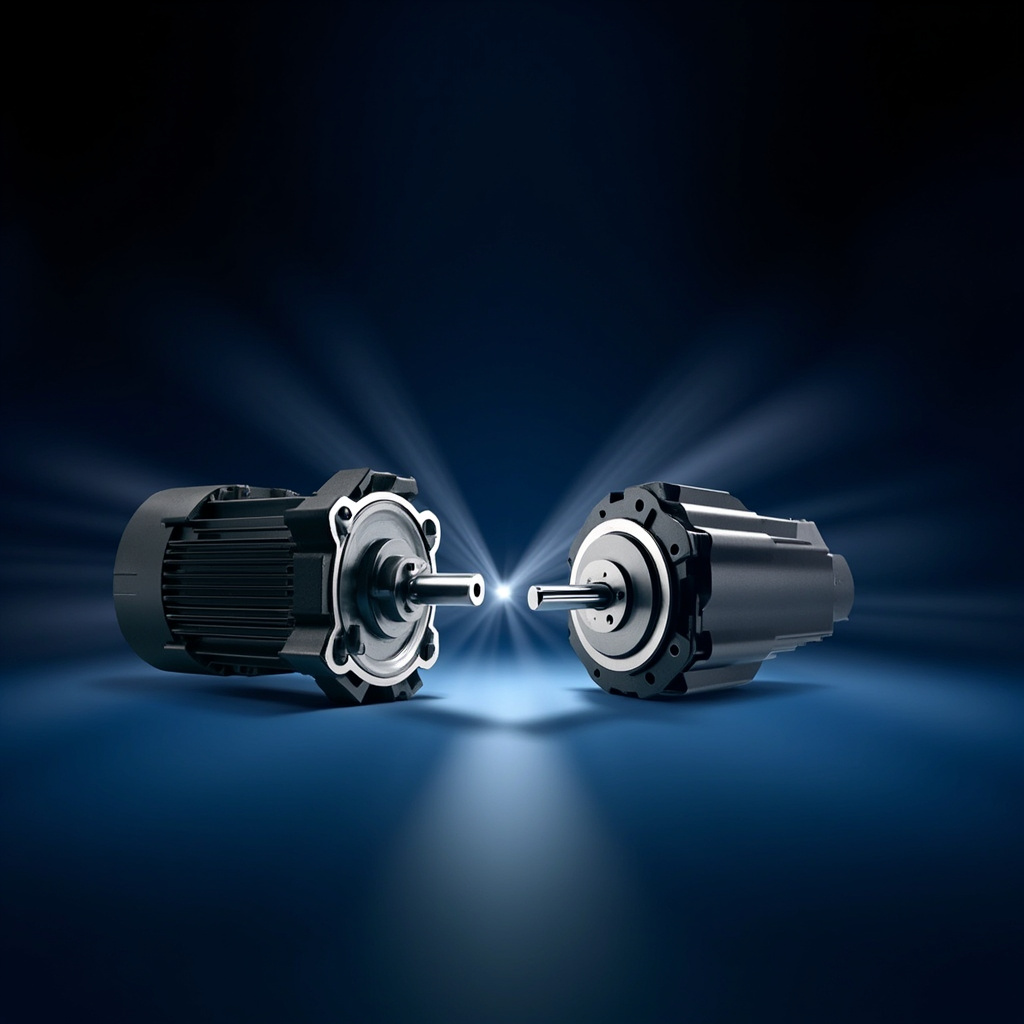
When it comes to industrial automation, CNC machining, robotics, and precision manufacturing, choosing the right motor can dramatically impact performance, efficiency, and overall cost. Two of the most commonly compared motor types are the spindle motor and the servo motor. While both play crucial roles in modern machinery, they are engineered for fundamentally different purposes. This in-depth guide breaks down the key differences, working principles, applications, and selection criteria to help engineers, technicians, and buyers make an informed decision between a spindle motor and a servo motor.
What is a Spindle Motor?
A spindle motor is a specialized electric motor designed to rotate cutting tools, workpieces, or grinding wheels at high speeds with exceptional precision and stability. Spindle motors are the heart of CNC machines, lathes, milling machines, and woodworking routers. They are engineered to deliver consistent torque, minimal vibration, and high rotational accuracy, often operating at speeds ranging from 10,000 RPM to over 100,000 RPM in high-end applications.
Spindle motors can be classified into several types, including AC induction spindle motors, brushless DC spindle motors, and high-frequency spindle motors. They often incorporate cooling systems, encoders, and vibration dampers to ensure optimal performance during demanding operations like metal cutting, engraving, and 3D milling.
What is a Servo Motor?
A servo motor is a closed-loop rotary or linear actuator that provides precise control over angular or linear position, velocity, and acceleration. Unlike standard motors, servo motors are integrated with a feedback system (typically an encoder or resolver) and a servo drive that constantly adjusts the motor’s behavior based on real-time input. This feedback loop enables servo motors to achieve exceptional accuracy, making them ideal for applications requiring precise motion control.
Servo motors are widely used in robotics, automated assembly lines, CNC machine axes (X, Y, Z), packaging machinery, and camera autofocus systems. They excel in applications where controlled movement, repeatability, and fast response times are critical.
Key Differences: Spindle Motor vs Servo Motor
The table below summarizes the main technical and functional differences between spindle motors and servo motors:
| Parameter | Spindle Motor | Servo Motor |
|---|---|---|
| Primary Function | Rotates tools/workpieces at high speed | Controls precise position, speed, and torque |
| Operating Speed | Very high (10,000–100,000+ RPM) | Moderate (1,000–6,000 RPM typical) |
| Control System | VFD (Variable Frequency Drive) or direct drive controller | Servo drive with closed-loop feedback |
| Feedback Device | Optional encoder for speed/position | Mandatory encoder or resolver |
| Torque Characteristics | High constant torque at operating speed | High peak torque for short bursts |
| Primary Application | CNC spindles, cutting, drilling, grinding | Robotics, automation, motion control axes |
Working Principle Comparison
How a Spindle Motor Works
A spindle motor is typically driven by a Variable Frequency Drive (VFD) that controls the input frequency and voltage to regulate speed. The motor’s rotor spins a tool holder (chuck or collet) at precise speeds. In high-precision systems, a built-in encoder provides real-time feedback to the controller, allowing closed-loop speed control. The motor is designed to maintain rigidity and reduce runout (lateral movement) for high-quality cuts.
How a Servo Motor Works
A servo motor operates on a closed-loop control system. The servo drive sends electrical pulses to the motor, while the encoder continuously reports the rotor’s actual position back to the drive. The drive then compares the actual position with the commanded position and instantly adjusts the current to correct any deviation. This continuous correction cycle happens thousands of times per second, resulting in extremely accurate motion control.
Advantages and Disadvantages
| Motor Type | Advantages | Disadvantages |
|---|---|---|
| Spindle Motor |
|
|
| Servo Motor |
|
|
Common Applications
Both motor types serve distinct roles, and in many CNC machines, they actually work together. Here are their most common real-world applications:
Spindle Motor Applications
- CNC milling machines – for cutting, drilling, and engraving.
- Woodworking routers – for shaping and carving wood panels.
- Grinding machines – for precision surface finishing.
- PCB drilling – for creating micro-holes in circuit boards.
- PCB milling – for high precision PCB manufacturing.
- Engraving machines – for detailed 2D and 3D engraving.
Servo Motor Applications
- Robotic arms – for accurate joint positioning.
- Automated conveyors – for synchronized product movement.
- CNC axis drives (X, Y, Z) – for moving the toolhead precisely.
- Pick-and-place machines – in electronics assembly.
- Textile and printing machinery – for tension and feed control.
- Camera gimbals and drones – for stabilization and tracking.
💡 Pro Tip: In a modern CNC machine, the spindle motor and servo motors work together — the spindle motor rotates the cutting tool, while the servo motors move the tool along the X, Y, and Z axes. Choosing a high-quality spindle paired with reliable servo motors is the key to achieving high machining accuracy and repeatability.
How to Choose Between a Spindle Motor and a Servo Motor
The decision depends entirely on the intended application. Use the following checklist to guide your selection:
- Choose a spindle motor if you need high-speed rotation for cutting, drilling, or grinding tools, especially in CNC, woodworking, or metalworking applications.
- Choose a servo motor if you need precise position, velocity, or torque control for automation, robotics, or coordinated motion tasks.
- Choose both if you’re building a CNC machine — servo motors for axes and a spindle motor for the rotating tool.
- Consider the budget: Spindle motors with VFDs can be costlier upfront, but servo motors may require frequent tuning and maintenance.
- Consider the control system: Ensure your controller (e.g., Mach3, LinuxCNC, Siemens, Fanuc) is compatible with the chosen motor and drive.
Final Verdict
Both spindle motors and servo motors are indispensable in modern industry, but they are engineered for different jobs. A spindle motor excels at high-speed rotational tasks like cutting and grinding, while a servo motor is the go-to solution for precise motion control in automation. Understanding their strengths, limitations, and ideal use cases ensures optimal performance, longer equipment life, and better return