
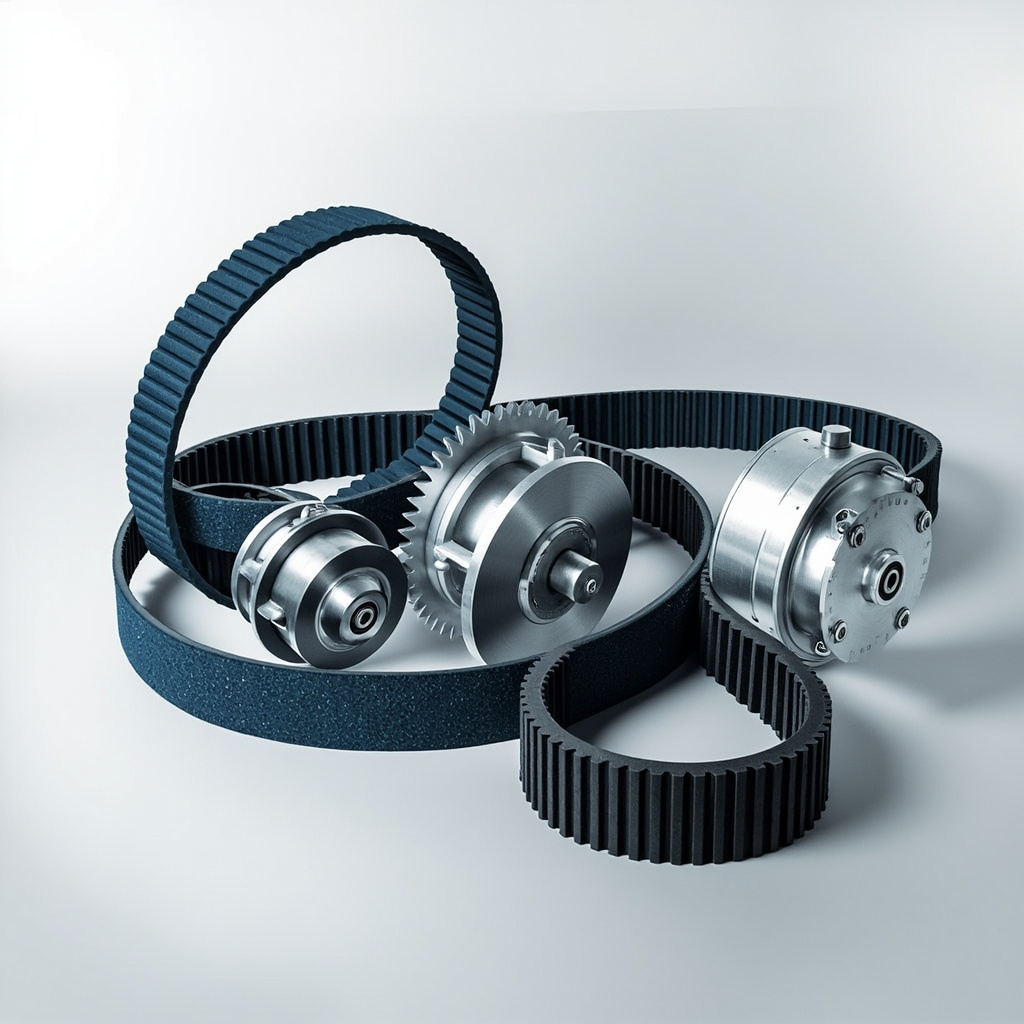
Selecting the right timing belt is a critical decision that directly impacts the performance, reliability, and lifespan of mechanical systems ranging from automotive engines to industrial machinery. A poorly chosen belt can lead to premature wear, system failure, costly downtime, and even catastrophic damage to connected components. Whether you are an engineer, mechanic, or maintenance professional, understanding the fundamentals of timing belt selection ensures optimal power transmission, synchronization, and operational efficiency. This comprehensive guide explores the key factors, materials, specifications, and best practices to help you make an informed decision tailored to your specific application.
Understanding Timing Belts and Their Function
A timing belt is a reinforced rubber belt with teeth that mesh with the grooves of pulleys, providing positive, slip-free power transmission. Unlike V-belts or flat belts, timing belts maintain precise synchronization between the driving and driven shafts, making them indispensable in applications where timing accuracy is essential, such as engine camshaft drives, conveyor systems, and 3D printers.
The core purpose of a timing belt is to transmit rotational motion while maintaining a fixed relationship between shafts. This precision is why timing belts are preferred in applications where the slightest deviation can cause malfunction or damage.
Key Factors to Consider When Selecting a Timing Belt
Choosing the right timing belt requires evaluating several interconnected parameters. Ignoring any one of them can compromise the entire drive system.
- Load and Torque Requirements: Determine the maximum load the belt must transmit. Overloading causes stretching, tooth skipping, and eventual failure.
- Operating Speed: High-speed applications require belts with balanced construction to prevent vibration and heat buildup.
- Center Distance and Pulley Sizes: These affect belt length, wrap angle, and overall drive geometry.
- Environmental Conditions: Exposure to heat, oil, chemicals, moisture, or dust dictates the belt material and cover fabric.
- Temperature Range: Standard belts operate between -30°C and 80°C, while specialty belts can handle extremes.
- Service Life Expectancy: Some applications demand maintenance-free operation for years, while others accept shorter intervals.
Types of Timing Belts by Profile
Timing belts come in standardized profiles that determine tooth geometry, pitch, and load capacity. Selecting the correct profile ensures compatibility with pulleys and adequate power transmission.
| Profile | Pitch (mm) | Typical Application | Power Range |
|---|---|---|---|
| XL | 5.08 | Office machines, small drives | Low |
| L | 9.525 | Light industrial, printers | Low to Medium |
| H | 12.7 | Machine tools, moderate loads | Medium |
| XH | 22.225 | Heavy industrial machinery | High |
| HTD | 3–20 | High torque drives, robotics | Medium to High |
| RPP / STD | 5–20 | Automotive, precision drives | High |
Material Selection for Timing Belts
The material composition of a timing belt determines its durability, flexibility, and resistance to environmental stressors. The three most common materials are:
- Neoprene (Polychloroprene): The most common material, offering excellent resistance to oil, weathering, and aging. Suitable for general-purpose applications.
- Polyurethane (PU): Highly resistant to abrasion, chemicals, and hydrolysis. Ideal for clean environments like food processing and medical equipment.
- Rubber with Fiberglass Tension Members: Reinforced with fiberglass or aramid (Kevlar) cords for superior tensile strength and minimal stretch, used in high-performance automotive and industrial applications.
Calculating the Correct Belt Size
Accurate measurement is the foundation of timing belt selection. The two primary dimensions are pitch length and width. The pitch length is the total length of the belt measured along the pitch line (the neutral axis), not the outer surface.
To calculate belt length, you need the pulley diameters (D1 and D2), the number of teeth on each pulley, and the center distance (C). The formula for pitch length is:
Always round up to the nearest standard belt length available from the manufacturer. Selecting a belt that is too short will overstress the tensioning system, while one that is too long can cause tooth jumping and reduced torque transfer.
Matching Timing Belts to Applications
Different industries impose different demands on timing belts. Below is a comparison of application-specific requirements:
| Application | Key Requirements | Recommended Belt Type |
|---|---|---|
| Automotive Engines | High durability, heat resistance, precision timing | HTD/RPP with HSN or neoprene |
| Industrial Machinery | Heavy load capacity, long service life | Reinforced rubber, steel tension cords |
| 3D Printers & CNC | Precision, low backlash, quiet operation | PU belts with steel reinforcement |
| Food Processing | Hygiene, chemical resistance, easy cleaning | Polyurethane with FDA approval |
| Medical Equipment | Sterilizable, low particle emission | TPU or silicone-based belts |
Common Mistakes in Timing Belt Selection
Even experienced engineers can make errors when choosing a timing belt. The most common pitfalls include:
- Choosing a belt based on physical length rather than pitch length.
- Ignoring the tooth profile compatibility between belt and pulley.
- Underestimating the impact of environmental contaminants like oil or coolant.
- Using a belt with insufficient tensile cord strength for high-torque applications.
- Neglecting to account for thermal expansion in high-temperature environments.
Browse topics
Categories
Latest insights
Recent posts
- Coordinate System Switching: A Complete Guide to Seamless Map Projections Transformation2026年8月29日
- Understanding Program Loop Execution: A Complete Guide to Efficient Iteration in Code2026年8月27日
- How to Calculate MTTR (Mean Time to Repair): Formula, Examples & Best Practices2026年8月25日
- MTBF Calculation: A Complete Guide to Mean Time Between Failures2026年8月23日
- Stall Protection Settings: A Complete Guide to Configuration and Optimization2026年8月21日
Discover more from Xiamen Lisen Trading Co., Ltd
Subscribe now to keep reading and get access to the full archive.