
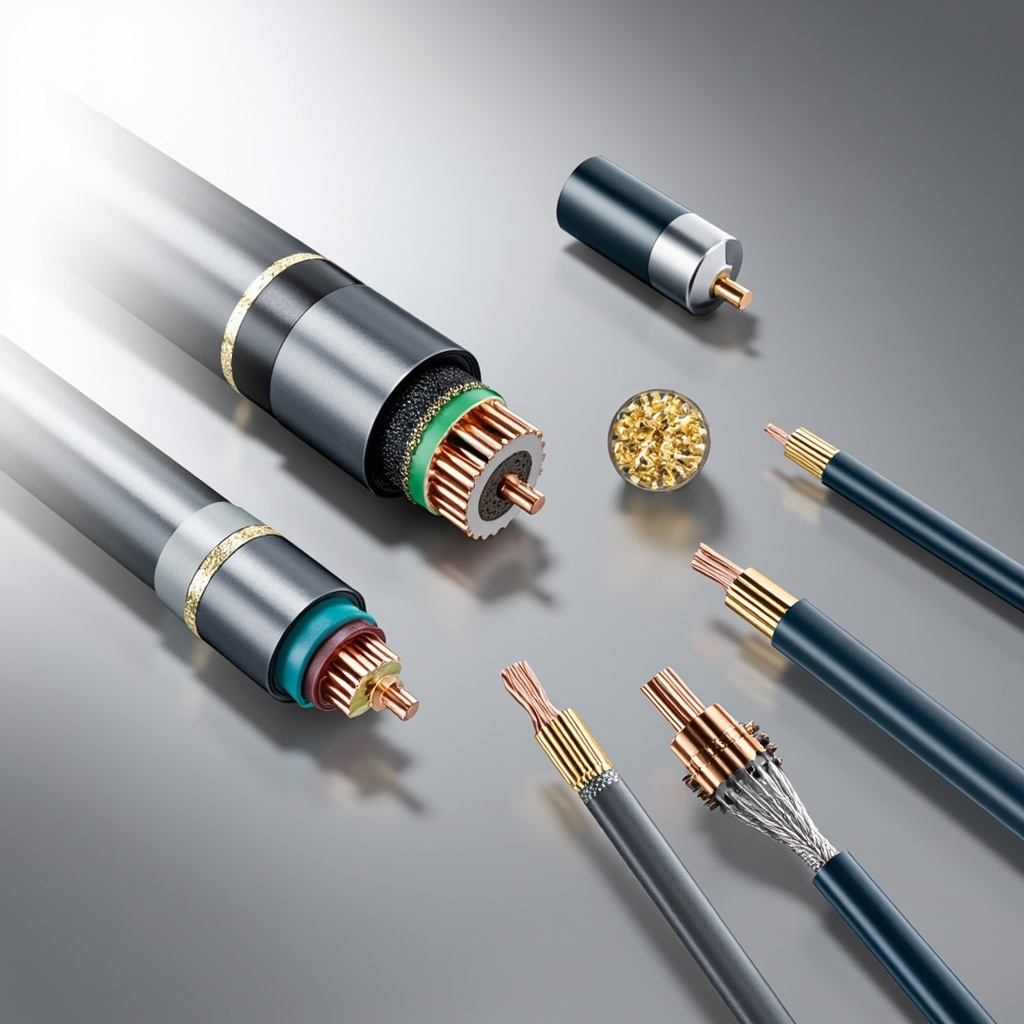
Selecting the right encoder cable is a critical decision that directly impacts the performance, reliability, and longevity of motion control systems. Whether you’re working with servo motors, CNC machines, robotics, or automated production lines, the encoder cable serves as the vital communication link between the encoder and the controller. A poorly chosen cable can lead to signal degradation, data errors, and costly downtime. This comprehensive guide explores the essential factors involved in encoder cable selection, helping engineers, technicians, and system integrators make informed decisions for their specific applications.
Encoder cables transmit low-voltage differential signals that are highly sensitive to electromagnetic interference (EMI), voltage drops, and mechanical stress. Therefore, understanding the nuances of cable construction, shielding, conductor sizing, and environmental ratings is essential to ensure signal integrity and operational reliability.
Understanding Encoder Cable Basics
An encoder cable is a specialized multi-conductor cable designed to carry signals between an encoder device (rotary or linear) and its receiving controller, drive, or counter. These cables must maintain signal fidelity over varying distances, often in electrically noisy industrial environments. The most common encoder types include incremental encoders, which produce quadrature signals, and absolute encoders, which transmit position data digitally.
- Incremental encoder cables typically carry 4 to 6 signals (A, B, Z, and their complements) plus power and ground conductors.
- Absolute encoder cables often require more conductors (8 to 12+) to transmit multi-bit position data, clock signals, and power.
- Servo motor encoder cables are frequently bundled with power cables in a hybrid configuration for compact installation.
Key Factors in Encoder Cable Selection
Choosing the right encoder cable requires evaluating several technical and environmental parameters. Below are the most important factors to consider during the selection process.
1. Cable Length and Signal Attenuation
Longer cable runs introduce greater signal attenuation and timing skew. For incremental encoder applications, most manufacturers recommend a maximum cable length of 20 to 30 meters, while absolute encoders using protocols like SSI, BiSS, or EnDat can sometimes support longer distances depending on the baud rate. Always consult the encoder manufacturer’s specifications for maximum recommended cable lengths.
2. Shielding and EMI Protection
Effective shielding is perhaps the most critical factor in encoder cable performance. Industrial environments contain significant electromagnetic noise from variable frequency drives (VFDs), motors, and switching power supplies. Common shielding options include:
- Foil shielding (Aluminum/Mylar): Provides 100% coverage and is effective against high-frequency interference.
- Braid shielding: Offers low DC resistance and good mechanical durability, typically 85% to 95% coverage.
- Foil + braid combination: Delivers the best overall EMI protection, ideal for harsh industrial settings.
3. Conductor Size and Material
Conductor size affects both voltage drop and signal integrity. For longer runs, larger conductors (e.g., 24 AWG to 22 AWG) help minimize voltage drop on power supply lines. Most encoder cables use tinned copper conductors for superior corrosion resistance and solderability, though bare copper is also common in lower-cost options.
4. Connector Types and Compatibility
Encoder cables use a variety of connector types depending on the manufacturer and application. Common connector families include M12, M23, D-sub (DB9, DB15), RJ45, and proprietary locking connectors. Ensuring connector compatibility between the encoder, cable, and controller is essential to avoid installation issues and signal mismatches.
5. Environmental and Mechanical Considerations
Encoder cables are often deployed in demanding environments that require specific ratings and construction features. Key environmental factors include:
- Temperature range: Standard PVC jackets typically support -10°C to +80°C, while PUR or TPE jackets extend this to -40°C to +105°C or higher.
- Oil and chemical resistance: Critical in machine tool and automotive applications.
- Flexibility and drag chain capability: Cables used in continuous flex applications (cable carriers) require special construction with stranded conductors and high-flex jacket materials.
- UV and weather resistance: Required for outdoor installations.
- Flame ratings: Look for UL AWM, CE, RoHS, and CSA certifications.
Encoder Cable Specification Comparison
The following table summarizes the typical specifications for different encoder cable categories to assist in your selection process:
| Cable Type | Conductor Size | Shielding | Max Length | Typical Application |
|---|---|---|---|---|
| Incremental (4-core) | 26–24 AWG | Foil + Drain | 20 m | Basic speed/position sensing |
| Incremental (6-core) | 24–22 AWG | Foil + Braid | 30 m | Servo motor feedback |
| Absolute (8-core) | 24 AWG | Foil + Braid | 50 m | SSI / EnDat encoders |
| Absolute (12-core) | 24–22 AWG | Foil + Braid + Drain | 100 m | High-resolution absolute systems |
| Hybrid (Power + Signal) | 20–26 AWG | Overall Foil + Braid | 25 m | Integrated servo systems |
| High-Flex (Drag Chain) | 26 AWG (stranded) | Foil + Braid | 15–25 m | Robotics, linear motion |
Common Applications and Cable Requirements
Different industrial applications impose unique demands on encoder cables. Understanding these requirements helps narrow down the most appropriate cable type for your installation.
- CNC Machines and Machine Tools: Require oil-resistant PUR jackets and high-flex construction due to continuous motion in cable carriers.
- Servo Drive Systems: Often use hybrid cables combining power and signal conductors in a single jacket to simplify installation and reduce cable management complexity.
- Robotics: Demand extreme flexibility, torsion resistance, and high cycle life ratings—often exceeding 10 million flex cycles.
- Packaging and Material Handling: Benefit from halogen-free, flame-retardant cables that meet food-grade or washdown requirements in some cases.
- Wind Turbines and Outdoor Installations: Need UV-resistant, weatherproof, and wide temperature range cables with extended mechanical durability.
Browse topics
Categories
Latest insights
Recent posts
- Mastering Multi-Task Program Management: Strategies for Success in 20262026年8月31日
- Coordinate System Switching: A Complete Guide to Seamless Map Projections Transformation2026年8月29日
- Understanding Program Loop Execution: A Complete Guide to Efficient Iteration in Code2026年8月27日
- How to Calculate MTTR (Mean Time to Repair): Formula, Examples & Best Practices2026年8月25日
- MTBF Calculation: A Complete Guide to Mean Time Between Failures2026年8月23日
Discover more from Xiamen Lisen Trading Co., Ltd
Subscribe now to keep reading and get access to the full archive.